Fresh Pasta Dough
- Makes
- Makes 4 servings
- Time
- 1.5 - 2.5 hours
Ingredients
Green amounts are scaled. Anything else is as written, so adjust it yourself.
Method
Amounts and times written inside the steps are for the original quantity.
- Stir together flour and salt in the bowl of a stand mixer. (To make pasta without a stand mixer use the well method, but do yourself a favour - buy a KitchenAid mixer!) Add the egg, egg yolk, and water. Mix the dough with the dough hook, kneading it for , until it comes together in an integrated mass that clings to the hook. If the dough looks shaggy and dry, add more water by the tablespoon.
- Remove the pasta dough from the bowl and knead it by hand on a lightly floured surface for a minute or so to bring it together and smooth it out. The resulting ball of dough should be smooth and resilient: it should spring back when poked. Wrap the dough in plastic wrap and let it rest for an hour or two (or as long as overnight) in the refrigerator.
- Clamp the pasta machine to the edge of your counter or attach the pasta attachment to the KitchenAid. Cut the ball of pasta dough into 3 pieces and lay a damp kitchen towel over them to keep them from drying out or forming a skin while you roll out the dough into sheets. Use your hands then a heavy rolling pin to shape one piece of the pasta dough into a rough rectangle just wide enough and compact enough to fit through the rollers of the pasta machine. Roll the pasta through the widest setting six or seven times, folding it over end to end or creasing it down the middle after the first pass. Don’t add flour on the first four or fives passes; you want the pasta to stick to itself during this stage to build up its strength, resilience, and eventual toothsomeness. By the fifth or sixth pass, you can dust it super-lightly with flour. After the seventh pass, it should be soft, with a nice sheen to it. Continue to pass the pasta through, narrowing the rollers with each pass. For fettuccine or tagliatelle, roll the pasta through all the way down to the finest setting. For linguine, stop a couple of degrees shy of that.
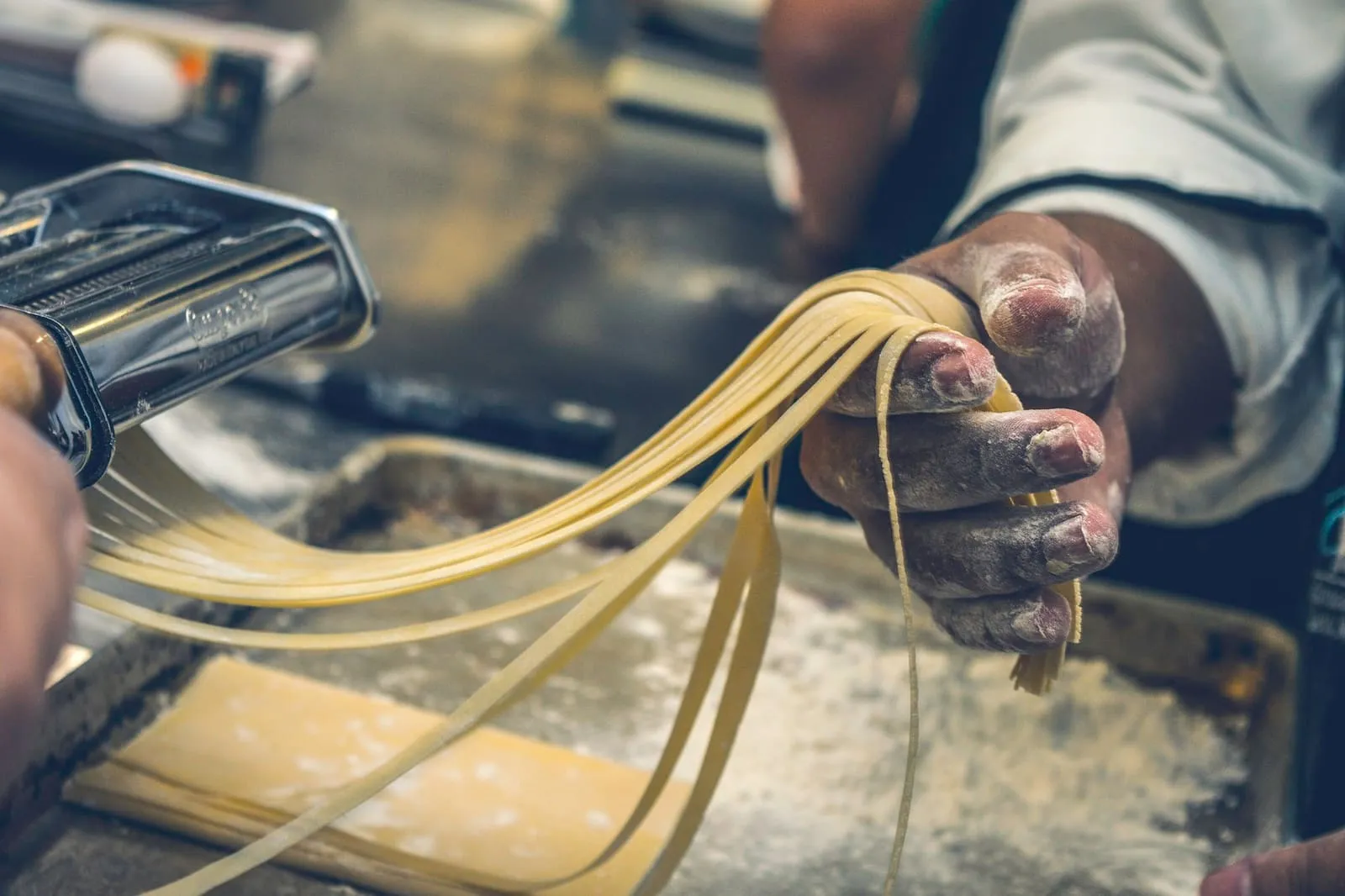
- Pass the pasta sheet through the desired cutting attachment or cut by hand, hang to dry on pasta drying rack. If you don’t have a pasta rack dust with flour and arrange on baking sheet, preferably on a lightly floured piece of parchment paper, and cover with plastic wrap. Refrigerate until ready to cook.
- To cook, drop the noodles into a large pot of boiling, well-salted water - salted to taste like the ocean, it adds flavour to the noodles. Cook for about after the first few noodles begin to float on top of the water. Drain, toss with the sauce of your choice, and serve.